



How To Safely Move A Grand Piano
What to Expect, Professional Techniques, and How to Prepare
Moving a grand piano isn’t just heavy lifting, it’s a carefully choreographed physics puzzle. With a weight range of 220 kg to over 540 kg, a delicate high-gloss finish, and thousands of finely tuned internal parts, you can’t exactly throw it in the back of a standard utility vehicle.
Because grand pianos are highly complex, specialised crews with extensive grand piano moving experience are non-negotiable.
To ensure your instrument is handled with the highest level of care, Eezi Move sends a dedicated on-site supervisor with our specialty piano moving teams.
This supervisor directly oversees the entire disassembly, wrapping, and reassembly process, making sure everything is executed to the highest professional standards.
What to Expect: The Specialised Trolley Method
Many people assume grand pianos are moved horizontally on their legs. In reality, a grand piano is almost always moved on its side. Piano legs are designed to handle vertical weight, not lateral (side-to-side) stress.
Pushing a grand piano across a room on its legs can easily snap them, causing catastrophic damage. To prevent this, our specialised crews use custom piano trolleys and a highly coordinated disassembly process:
- The Heavy Lift: Depending on the size and weight of the piano, the initial tilt requires a strong team of 5 to 8 professional movers to ensure absolute safety and control.
- The Initial Tilt: Under the watchful eye of the Eezi Move supervisor, the team carefully lifts the left bass corner of the piano just enough to unscrew and remove the first leg.
- Lowering to the Trolley: The piano is gently lowered onto its straight, flat side (the spine) onto a specialised, heavy-duty trolley. Never rest a piano on its curved side.
- Full Disassembly: With the body safely supported vertically on the trolley, the remaining two legs and the pedal lyre (the bottom pedal assembly) are carefully unbolted.
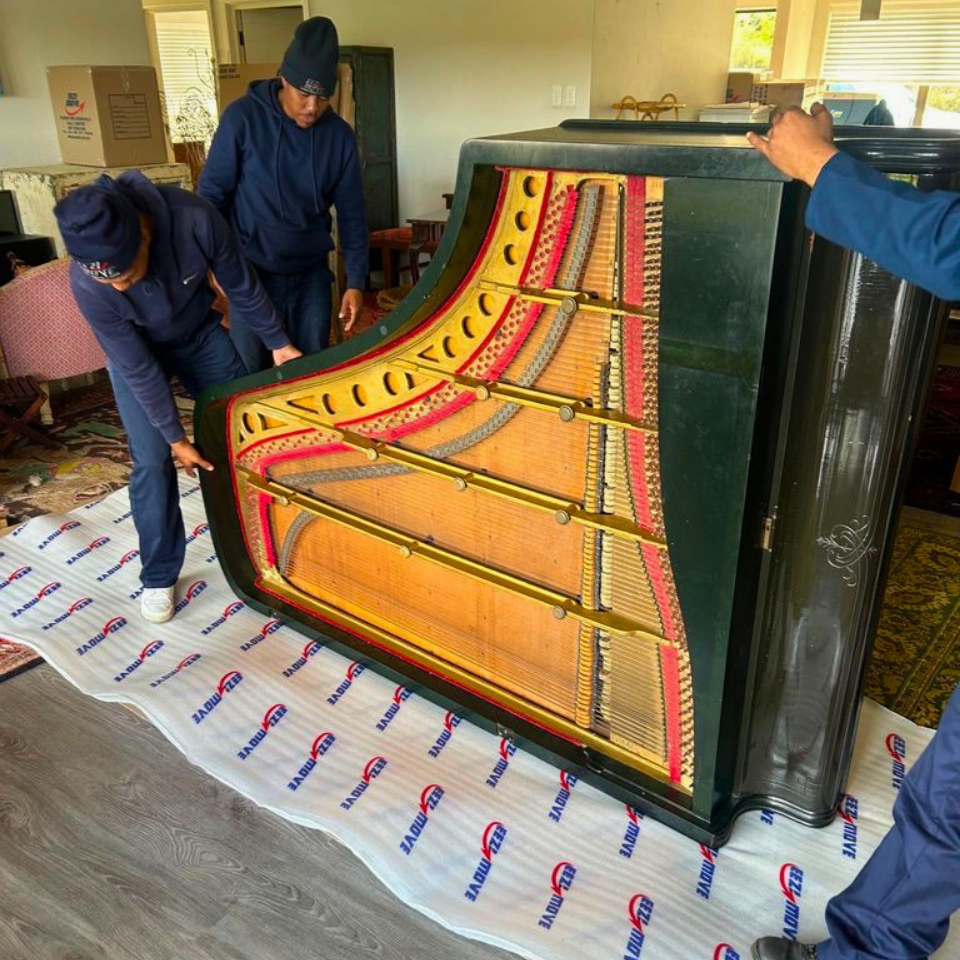
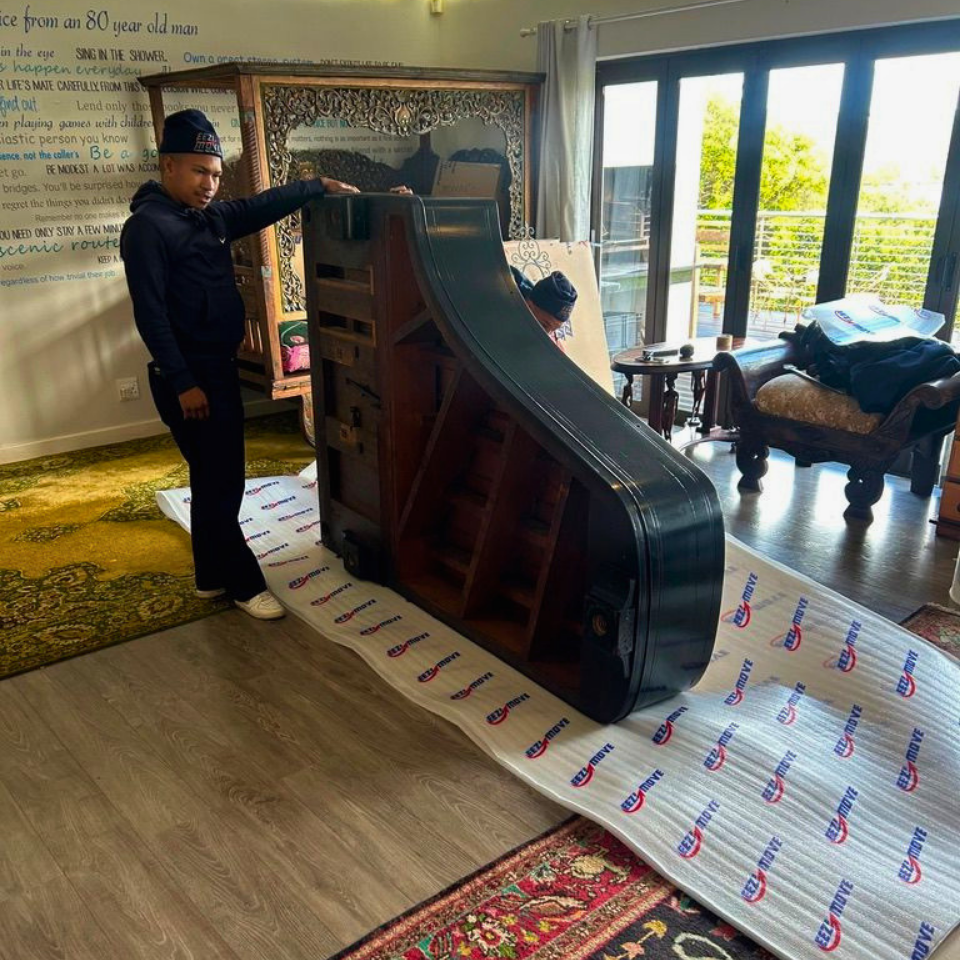
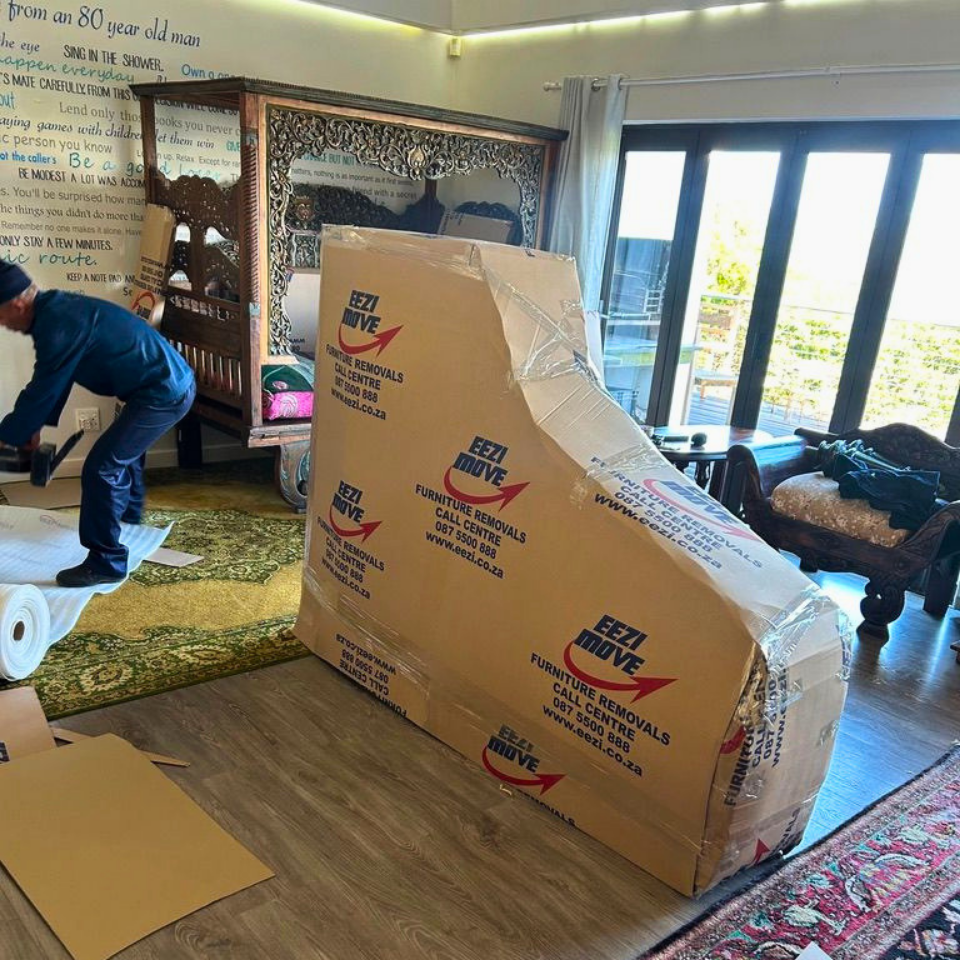
Technical Packing: Aerothene & Corrugated Sheets
A grand piano’s exterior is incredibly delicate. To prevent scratches, dents, or pressure marks, we rely on heavy-duty, professional-grade packing materials rather than standard blankets during transit prep:
- The Core Wrap: The piano body is wrapped in thick layers of aerothene (a specialised, protective foam cushioning) followed by heavy-duty corrugated flat sheets to form a rigid, impact-resistant shield.
- The Keyboard Lid (Fallboard): The keyboard lid should never be taped. Tape adhesive can permanently ruin a lacquer or polyester piano finish. Instead, the lid is securely wrapped with aerothene and corrugated flat sheets to keep it locked in place without risking the finish. (We avoid using blankets or standard stretch film directly on this area).
- On the Truck: Once the piano is securely loaded onto the moving truck, moving blankets are used as an additional, heavy-duty layer of padding to secure the instrument for the road.
How to Prepare: Partnering with Your Moving Consultant
While our specialised crew and supervisor handle the heavy lifting, your preparation ensures we arrive with the perfect game plan.
- Document the Pre-Move Condition & Share Photos
Take high-resolution photos of your piano from every angle. Send these photos directly to your Eezi Move consultant ahead of time. These photos allow our consultants to assess the exact size and specifications of your piano, ensuring we allocate the correct specialty crew, the correct equipment, and the right number of hands (between 5 and 8 movers) for a flawless execution.
- Clear the Body and the Path
Pianos often become display hubs for family photos, plants, and lamps. Completely clear the top of the piano. Next, clear a wide, flat path through your home: remove area rugs (which are major tripping hazards), take doors off hinges if clearance is tight, and keep pets and children completely out of the work area.
What to Do Post-Move: The Acclimation Period
Once your piano arrives safely in its new home and is meticulously reassembled by our team, there is one final thing to expect: it will be out of tune. The wood and cast-iron plate inside a piano are highly sensitive to changes in humidity and temperature. The physical movement combined with a new home’s climate will cause the wood to expand or contract slightly.
|